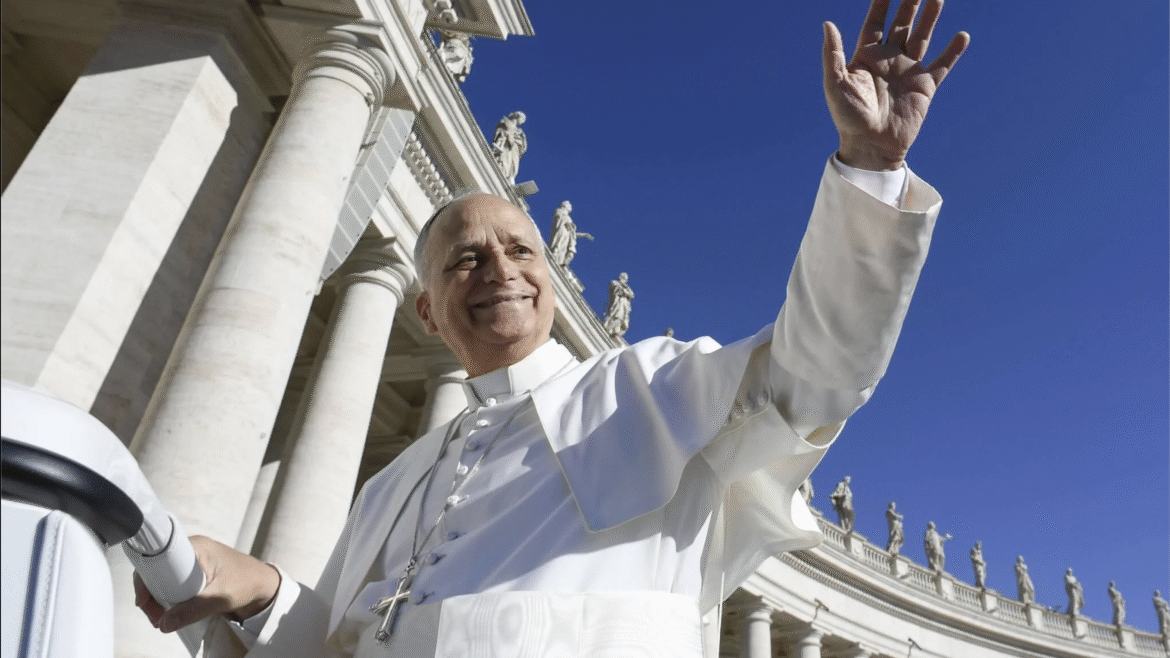
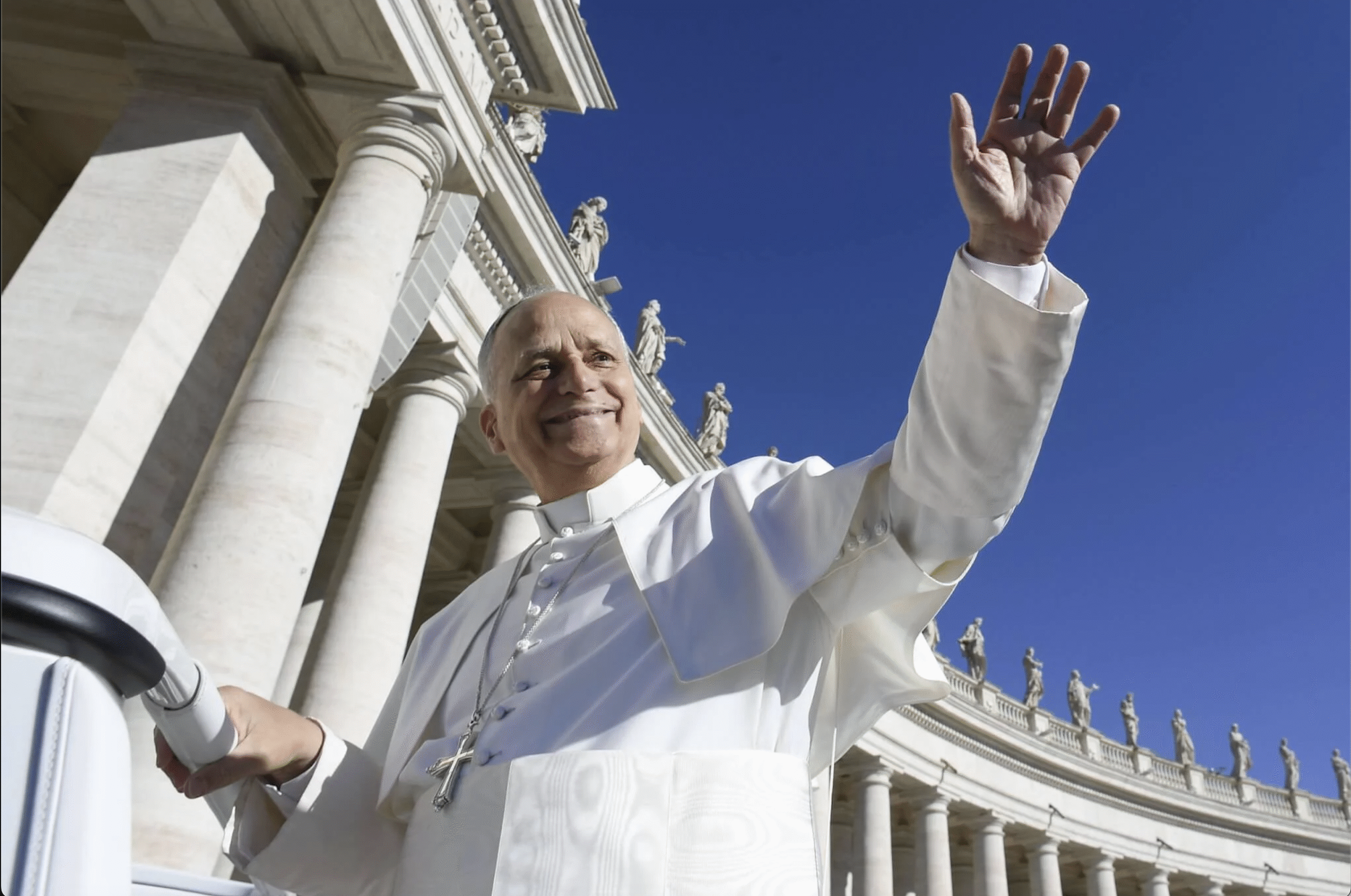
ROME — Pope Leo XIV has released his first apostolic exhortation, “Dilexi te” (“I have loved you”), a call to place the poor at the center of the Church’s life and mission. Signed on the feast of St. Francis of Assisi, the text insists that faith and love for the poor are inseparable.
The Master of the Order of Preachers, Br. Gerard Francisco Timoner III, OP, said the document highlights themes central to Dominican preaching: evangelical poverty, integrity, and credibility.
“St. Dominic’s last words were: ‘My very dear brothers, this is what I leave to you as a possession to be held by right of inheritance by you, my children. Have charity, preserve humility, and possess voluntary poverty.’ (Libellus of Jordan of Saxony, 92),” Br. Gerard recalled.
“‘To possess poverty’ sounds a contradiction! How can one ‘possess’ that which is about ‘dispossession’, or how can one ‘own’ the ‘renunciation of ownership’? Evangelical poverty is not about being destitute. ‘Remember how generous the Lord Jesus was: he was rich but he became poor for your sake, to make you rich out of his poverty’ (II Cor. 8:9). Evangelical or voluntary poverty is about being free from attachments. For St. Dominic and St. Francis, voluntary poverty is a deliberate choice to live simply, to need less, so that one can be freer to follow Christ. St. Dominic’s last words on ‘possessing voluntary poverty’ is about ‘owning one’s freedom from ownership of things’.”
He continued: “It is the freedom that Jesus requires of those who are called to preach the Good News: ‘Do not take gold or silver or copper for your belts; no sack for the journey, or a second tunic, or sandals, or walking stick. The laborer deserves his keep’ (Mt 10:7-10). It is about ‘travelling light’ so that we can focus on the only task that matters: the preaching of the Gospel. This is the same radicalism that Jesus demands of us today.”
A call for ‘witnesses of integrity’
Pope Leo’s exhortation insists that “the Truth needs witnesses of integrity.” For Br. Gerard, that demand speaks directly to the Dominican vocation. “Integrity (from the Latin ‘integer’ which means ‘whole’) means wholeness or completeness. Its opposite is multiplicity, duplicity, fragmentation, dividedness. Integrity means coherence of words and actions,” he explained.
“‘Receive the Gospel of Christ, whose herald you have become. Believe what you read, teach what you believe and practice what you teach.’ These are the words addressed to a newly ordained deacon. These are the same words any herald or preacher of the Gospel must take to heart. To witness to the Truth with integrity is to preach Christ by how we live.”
Br. Gerard also pointed to the origins of the Order. “Once I read that ‘Dominic followed Christ the preacher who was poor; Francis followed the poor Christ who preached.’ Though they differed in emphasis, both followed Christ in a radical way.
“Dominic was accompanying Diego, the Bishop of Osma, who realized that to win heretics back to the faith, they need to preach in a different way: ‘This is not the way, my brethren, this is not the way for you to proceed. I do not think it possible, by words alone, to lead back to the faith such men as are better attracted by example. Look at the heretics! While they make a pretense at piety, while they give counterfeit examples of evangelical poverty and austerity, they win the simple people to their ways. Therefore, if you come with less poverty and austerity, you will give hardly any edification, you will cause much harm, and you will fail utterly of your objective. Match steel with steel, rout false holiness with the true religion.’ (Libellus, 20).”
Intentional poverty as solidarity
Looking to the present, he said poverty must be understood as solidarity and communion. “The biblical scholar Jerome Murphy-O’Connor, OP, asserted that the essence of the vow of poverty is sharing. This shifts the focus of voluntary poverty away from one’s relationship to material possessions (consumerism, materialism) and toward one’s relationship with other persons. In this light, poverty is not merely about what we give up, but about how we live in solidarity and communion with others.
“It has been noted that in the Old Testament, the presence of poverty is seen as a practical denial of covenantal brotherhood and sisterhood. This understanding is rooted in the covenantal promise found in Deuteronomy 15:4: ‘There shall be no poor among you.’ In other words, true fidelity to the covenant with God includes a shared responsibility to ensure the dignity and well-being of all.”
He concluded by recalling St. Dominic’s own chosen title: “We recall of course, the example of our founder who wanted to be called ‘Brother Dominic’. This seemingly humble designation is in fact a very ‘theological title’ because it ‘preaches’ and points to the coming Kingdom of God where everyone is a ‘brother’ and a ‘sister,’ for there is only one Father who is in heaven, who provides for all our needs.”
Weeks after the Order joined the Church in celebrating the canonization of Saint Pier Giorgio Frassati—a young Lay Dominican known for his radical charity—the Master noted that Pope Leo’s words come at just the right moment for the Dominican Family. “The Holy Father is asking the whole Church to live with the same freedom and joy that marked Dominic, Francis, and Pier Giorgio. That is the spirit of ‘Dilexi te,’ and it is the mission of the Order of Preachers today.”

